
Spotted Lanternfly Control in Western Massachusetts and Connecticut
An Invasive Pest That Puts Your Property at Risk
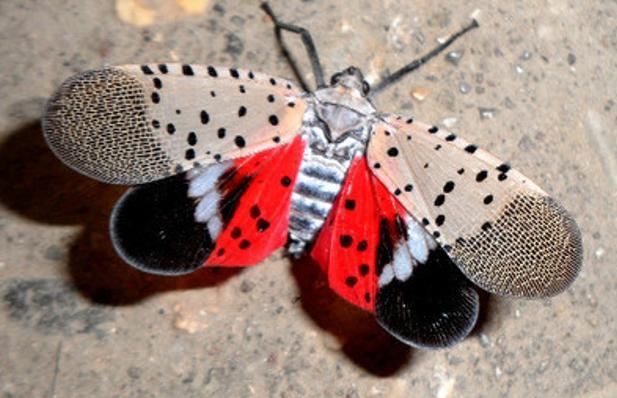
The spotted lanternfly (Lycorma delicatula) is not native to the area, and its spread across the Northeast has caused serious issues for property owners, landscapers, and farmers. First spotted in Pennsylvania in 2014, this invasive insect has since established populations throughout the mid-Atlantic and New England regions, including Western Massachusetts and Connecticut.
The spotted lanternfly does not harm structures or bite people. It feeds aggressively on the sap of trees, shrubs, vines, and ornamental plants. This feeding weakens plants, lowers their ability to handle seasonal stress, and produces a sticky substance called honeydew that promotes mold growth on surfaces beneath affected plants. If left unchecked, a spotted lanternfly population on your property can grow quickly and cause lasting damage to the trees and landscaping you've worked hard to maintain.
At American Pest Solutions, we have been safeguarding residential and commercial properties throughout Connecticut and Western Massachusetts for over a century. Our team consists of licensed, insured technicians and a board-certified entomologist, providing insight that most pest control companies cannot match. When our technicians check a property for spotted lanternfly activity, we evaluate the entire situation: active feeding sites, egg masses, host trees, and the conditions that attract the pest. This assessment guides the development of the removal and management plan for your property.
Call (413) 966-1095 or contact us online to schedule spotted lanternfly control in Western Massachusetts or Connecticut and protect your trees before the season's population builds.
How Spotted Lanternflies Damage Trees and Shrubs
The damage caused by a spotted lanternfly infestation isn't always immediately visible. These insects use piercing mouthparts to extract sap directly from plant tissue, and the damage builds up over multiple feeding sessions during the season. By the time any decline is visible, the plant has often been stressed for weeks.
The signs our technicians look for during a property assessment include:
- Wilting or weeping branches – Active sap extraction stresses vascular tissue and reduces the tree's ability to move water and nutrients, causing branches to droop or weep even without visible wound sites.
- Honeydew buildup on leaves and surfaces – Spotted lanternflies excrete excess sugar as honeydew, which coats leaves, bark, outdoor furniture, and hardscaping beneath infested trees. Our technicians note the extent and location of honeydew deposits to gauge the density of the active population.
- Sooty mold growth – Honeydew provides a food source for black sooty mold fungi. When our team identifies sooty mold during an inspection, it confirms sustained feeding activity rather than a passing infestation.
- Egg masses on flat surfaces – Between October and early spring, spotted lanternflies lay seed-like egg masses on tree bark, stone, outdoor furniture, and even vehicles. Locating egg masses on your property helps our technicians assess overwintering populations and plan the timing of early-season treatments.
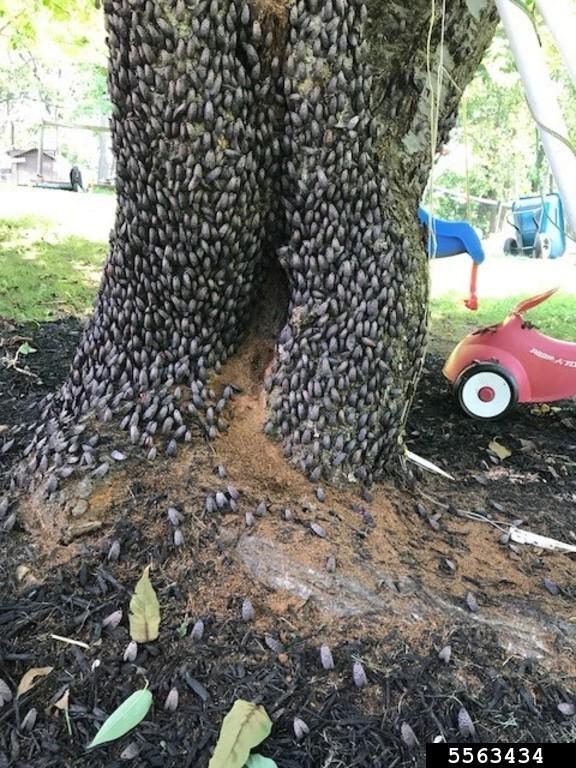
- Visible adult populations in late summer and fall – Adults emerge in late July and become increasingly active through October. Large congregations on trunks and lower branches are a reliable indicator of an established population requiring treatment.
Each of these signs explains how our technicians develop your treatment plan, including which property areas to focus on and the timing of each application.
Our Spotted Lanternfly Treatment Program
Effective spotted lanternfly control involves working with the pest's life cycle, not against it. A single treatment at the wrong time of year may temporarily lower populations but allows the next generation to rebound. American Pest Solutions employs a three-treatment yearly program timed precisely to interrupt spotted lanternfly development at each critical stage.
The three treatment windows are:
- May – Targeting early-stage nymphs before populations establish feeding sites and begin expanding across the property.
- August – Targeting late-stage nymphs and emerging adults during the period of peak feeding pressure, when plant stress is at its highest.
- October – Targeting adult populations ahead of egg-laying to reduce the number of overwintering egg masses that will hatch the following spring.
Treatment applications focus on tree trunks, bark surfaces, the ground-level zones beneath tree canopies, shrubs and ornamental plantings, and non-fruit-bearing vines known to attract spotted lanternflies. Products are applied to create a residual barrier on surfaces where these insects congregate and travel.
Our team adheres to all EPA label guidelines for each application and carefully avoids treating fruit-bearing plants and flowering or blooming vegetation to protect pollinators. If your property has areas that need special attention, our technicians note them during the initial assessment and modify the plan as needed.

Trust Massachusetts' oldest family owned pest control company to protect your family & home.
What to Know About Spotted Lanternfly on Your Property
Spotted lanternflies target specific host plants, especially the invasive tree-of-heaven (Ailanthus altissima), as well as grapes, apples, hops, maples, and oaks. Properties with these species are at higher risk for infestation and often face ongoing pressure without a consistent management plan.
Because spotted lanternflies also move between properties and spread through egg masses attached to vehicles, firewood, and outdoor equipment, active infestations on neighboring land increase the pressure your property faces each season. A program that manages your property's population while decreasing overwintering egg masses is a reliable way to stay ahead of repeated reinfestation.
Spotted Lanternfly Control for Residential and Commercial Properties
American Pest Solutions offers spotted lanternfly control for homeowners, property managers, and commercial clients throughout Western Massachusetts and Connecticut. Whether you're managing a single residential lot or a larger commercial property with extensive tree coverage, our technicians perform a thorough inspection before any treatment begins and create a treatment plan based on the findings.
Our board-certified entomologist informs the protocols our team follows for invasive species management, so that our approach reflects current knowledge of spotted lanternfly behavior, host plant patterns, and life cycle timing across our service region.
Contact our team at (413) 966-1095 to schedule a spotted lanternfly inspection for your property in Western Massachusetts or Connecticut.



-
We're ResponsibleAll of our employees undergo stringent background checks, including drug screening. Our field representatives are committed to providing exceptional service, while our office staff, praised by customers for their expertise, diligently assists with inquiries regarding services, products, scheduling, and payment options.
-
We've got the solutionsOur company President, Bob Russell, is a Board Certified Entomologist, and a member of the Entomological Society of America, distinguishing us from others in our field. Should you encounter an unidentified pest, simply photograph it, email us the picture with details of its discovery, and we'll promptly provide a confirmed identification and expert treatment recommendations.
-
We're licensed & certified.American Pest Solutions, recognized by the NPMA as a QualityPro certified company, boasts licensed and certified pest control professionals in Massachusetts and Connecticut. Engaged in both regional and national pest management associations, our employees undergo annual recertification training and seminars, supplemented by regular classes conducted by our resident Entomologist at our facility.