
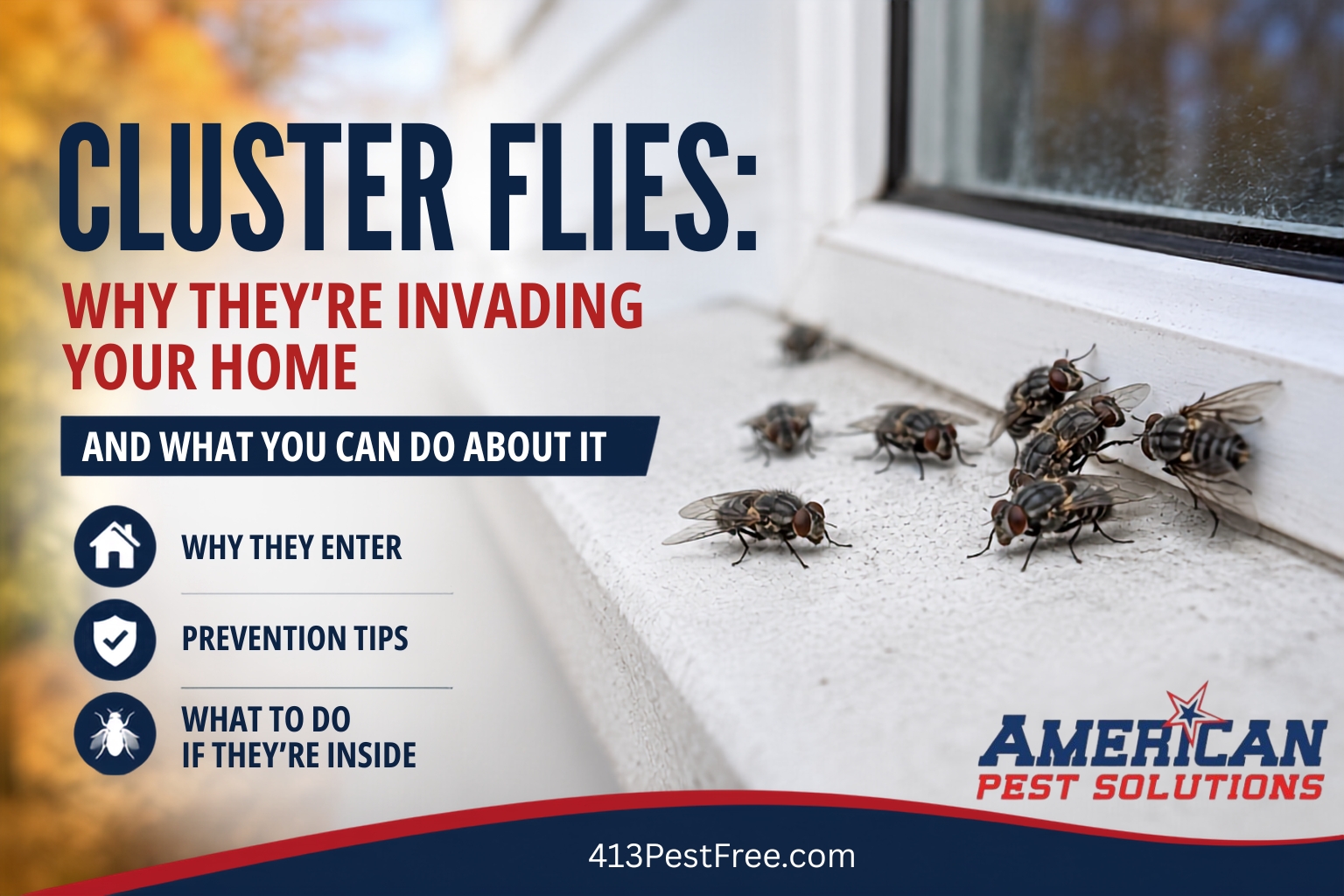
Cluster Flies: Why They're Invading Your Home (and What You Can Do About It)
Cluster Flies: The Quiet Fall Invader
As the weather begins to cool, many homeowners expect to see mice looking for warmth. What surprises many people is that cluster flies are often searching for shelter too.
Unlike house flies that are attracted to garbage and food waste, cluster flies are simply looking for a protected place to spend the winter. Unfortunately, that place is often your attic, walls, or unused rooms.
If you've noticed large, slow-moving flies gathering around windows on sunny days, cluster flies are likely the culprit.
What Are Cluster Flies?
Cluster flies are slightly larger than common house flies and have a dull gray appearance with faint golden hairs on their thorax. They move much more slowly than house flies and often seem sluggish, especially during cooler weather.
One of the easiest ways to identify them is by their behavior. Instead of buzzing around kitchens or trash cans, they tend to:
Gather in large groups
Rest on walls or ceilings
Collect around windows and light sources
Appear suddenly during warm winter days
Although they can become a nuisance, cluster flies do not breed indoors and are not considered a health hazard.
Why Are They Coming Into My House?
Cluster flies spend the warmer months outdoors. Their larvae develop in the soil by feeding on earthworms.
As temperatures begin to drop in late summer and early fall, adult cluster flies search for protected places to survive the winter. They often enter homes through:
Small gaps around windows
Openings around doors
Utility penetrations
Roof vents
Soffits
Cracks in siding or foundation
Once inside, they hide in attics, wall voids, and other secluded spaces until warmer temperatures wake them up.
This is why homeowners often notice flies inside during the middle of winter or early spring, even though windows and doors have remained closed.
Are Cluster Flies Dangerous?
The good news is that cluster flies are mostly a nuisance.
They do not:
Bite people
Sting
Damage wood or insulation
Reproduce inside your home
Spread disease the way house flies can
However, large infestations can become frustrating. Hundreds of flies may emerge from walls or attics on sunny winter days, collecting around windows as they try to escape outdoors.
Dead flies can also attract secondary pests such as carpet beetles.
How to Prevent Cluster Flies
The best time to stop cluster flies is before they get inside.
Here are a few prevention tips:
Seal Entry Points
Inspect your home for cracks and gaps around:
Windows
Doors
Utility lines
Rooflines
Vents
Siding
Proper sealing can greatly reduce the number of flies entering your home.
Keep Screens in Good Condition
Repair damaged window screens and ensure attic and foundation vents are properly screened.
Schedule Preventative Exterior Treatments
Professional exterior treatments applied before cluster flies begin searching for winter shelter can significantly reduce the number that enter your home.
Timing is everything. Preventative treatments are most effective in the fall, before flies have settled inside wall voids.
What If They're Already Inside?
Once cluster flies have entered wall voids or attics, treating the inside of the home is often less effective than preventing future invasions.
If flies begin appearing indoors:
Vacuum visible flies rather than swatting them.
Dispose of the vacuum contents promptly.
Avoid using over-the-counter foggers or bug bombs, which rarely solve the problem.
Plan preventative treatments before next fall to reduce future infestations.
When Should You Call a Professional?
If you're seeing dozens, or even hundreds, of flies gathering around your windows every fall or winter, it's time for a professional inspection.
At American Pest Solutions, our technicians identify where cluster flies are entering and recommend preventative treatments designed to help keep them out before they settle in for the season.
The sooner you prepare your home, the fewer unwanted guests you'll have when cooler weather arrives.
Keep Cluster Flies Outside This Fall
Cluster flies may not be dangerous, but they can quickly become an unwelcome nuisance once they find a place to overwinter.
Taking preventative action before temperatures drop is the most effective way to protect your home and enjoy a fly-free fall and winter.
If you're already noticing signs of cluster flies, or want to prevent them before they arrive, American Pest Solutions is here to help. Contact us today to schedule an inspection and keep your home protected all season long.