
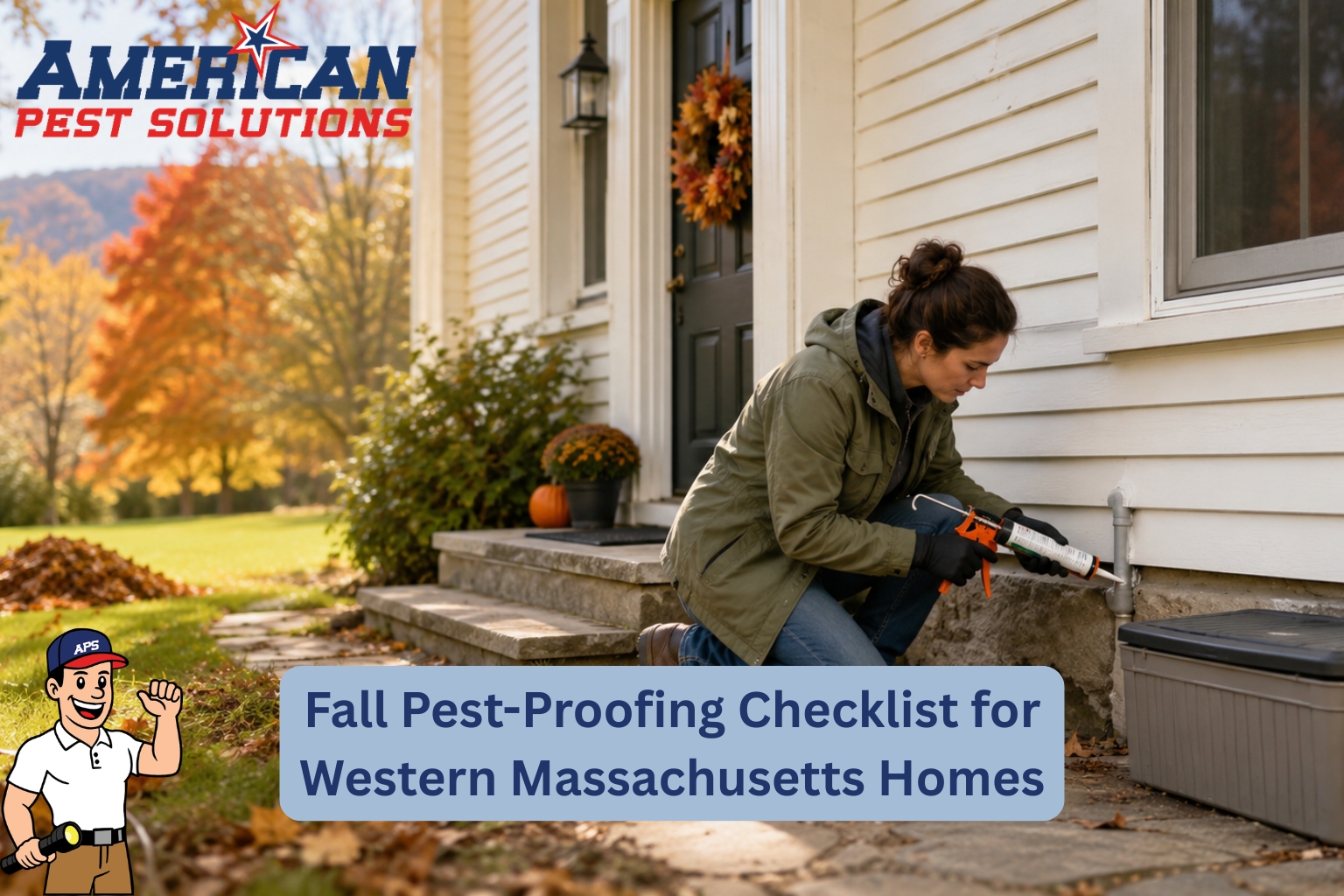
Fall Pest-Proofing Checklist for Western Massachusetts Homes
Fall in Western Massachusetts brings colorful leaves, cooler evenings, and the return of familiar seasonal routines. Unfortunately, it also sends mice, spiders, stink bugs, and other pests searching for food, warmth, and shelter.
Once pests enter a home, they may hide inside walls, attics, basements, and other difficult-to-reach spaces throughout the winter. Taking preventive steps early in the fall can help you avoid unwelcome surprises when temperatures drop.
Use this fall pest-proofing checklist to prepare your home for the colder months ahead.
1. Inspect the Foundation for Gaps
Mice can squeeze through surprisingly small openings. Insects need even less room to enter.
Walk slowly around your foundation and look for cracks, holes, and gaps where different building materials meet. Pay particular attention to openings around pipes, cables, utility lines, basement windows, and exterior faucets.
Seal small cracks with an appropriate weather-resistant material. Larger gaps may require metal mesh or professional repairs. Expanding foam alone may not stop determined rodents because mice can chew through it.
2. Check Exterior Doors
Gaps beneath exterior doors can provide pests with a direct route inside. Inspect the doors leading into your home, basement, mudroom, and attached garage.
Replace damaged weatherstripping and install door sweeps where light is visible beneath a closed door. Check garage doors carefully, particularly around the lower corners where worn seals frequently create openings.
Remember to examine seldom-used doors. An entrance that stays closed most of the year can still have gaps large enough for insects or rodents.
3. Repair Window Screens
Examine window screens for tears, loose edges, and bent frames before closing your windows for the season. Repair or replace damaged screens and make sure each one fits securely.
Check the caulking around window and door frames as well. Cracked or missing caulk may allow boxelder bugs, stink bugs, lady beetles, and other overwintering pests to enter wall voids.
These insects often gather on the sunny sides of homes during warm fall afternoons, making south- and west-facing windows especially important to inspect.
4. Screen Vents and Other Openings
Attic vents, soffit vents, exhaust openings, and crawl-space vents can become entry points when they are damaged or left unprotected.
Make sure these openings have suitable screens or covers that remain securely attached. Never block a vent that your home needs for airflow or appliance safety. If you are uncertain about how to protect an opening without affecting its function, consult a qualified professional.
Also inspect the areas around rooflines, chimneys, fascia boards, and siding for deterioration or gaps.
5. Keep Firewood Away From the House
A neatly stacked pile of firewood may offer shelter to ants, spiders, beetles, mice, and other pests. Keep firewood off the ground and as far from the home as practical.
Only bring in the amount of wood you plan to use soon. Before carrying a log inside, inspect it and brush off any visible insects or webs.
Avoid storing firewood in the basement, garage, or against the foundation. Bringing large quantities indoors can allow hidden pests to emerge in your living space.
6. Remove Leaves and Yard Debris
Fallen leaves, grass clippings, weeds, and unused garden materials can create damp hiding places for pests. Rake leaves away from the foundation and keep gutters clear so rainwater drains properly.
Trim branches, shrubs, and vines that touch the house. Rodents and insects can use vegetation as shelter or as a bridge to reach the siding and roof.
Pay attention to items sitting undisturbed in the yard, including planters, children’s toys, tarps, and construction materials. Move or clean these items before pests settle beneath them.
7. Address Moisture Problems
Many pests are attracted to moisture. Inspect basements, crawl spaces, kitchens, bathrooms, and laundry areas for leaks or excessive humidity.
Your fall maintenance should include:
Repairing leaking pipes and faucets
Checking beneath sinks and appliances
Cleaning gutters and downspouts
Directing water away from the foundation
Using a dehumidifier in persistently damp areas
Replacing water-damaged materials
Moisture problems can attract pests such as silverfish, cockroaches, centipedes, and ants. They may also point to a maintenance issue that deserves attention.
8. Organize Storage Areas
Clutter provides pests with sheltered places to hide and build nests. Reduce unnecessary items in attics, basements, closets, garages, and utility rooms.
Replace open cardboard boxes with durable plastic containers that have tight-fitting lids. Keep containers elevated when possible and leave enough space along walls to inspect for activity.
Look for droppings, gnaw marks, shredded material, shed insect skins, webbing, and unusual odors while reorganizing. These signs may indicate that pests are already present.
9. Store Food and Pet Supplies Securely
Rodents and insects do not need access to an entire meal to remain inside a home. Crumbs, spilled ingredients, pet food, and unsecured trash can provide a dependable food source.
Store pantry staples and pet food in sealed containers. Clean beneath appliances, wipe up spills promptly, and empty indoor trash regularly. Avoid leaving pet food out overnight.
Remember to inspect birdseed, grass seed, and livestock feed stored in garages or outbuildings. These products are especially attractive to rodents.
10. Inspect Seasonal Decorations
Before bringing fall or Halloween decorations indoors, examine boxes, wreaths, artificial plants, costumes, and fabric items for pests.
Decorations stored in an attic, basement, shed, or garage may contain spiders, silverfish, beetles, or evidence of mice. Unpack boxes in a well-lit area, shake out fabric items, and vacuum containers when necessary.
When the season ends, store decorations in sealed plastic bins instead of cardboard boxes to reduce future hiding places.
11. Know the Signs of a Rodent Problem
Even a well-maintained home can develop a pest problem. Watch for signs of mice or other rodents, including:
Droppings in cabinets, drawers, or storage areas
Gnaw marks on food packages or building materials
Scratching or movement inside walls
Shredded paper, insulation, or fabric
Greasy marks along walls and baseboards
A stale or musky odor
Pet interest in a particular wall or appliance
Rodents can remain hidden while an infestation grows. If you notice these signs, avoid relying exclusively on traps without identifying how the animals entered.
12. Schedule a Professional Pest Inspection
Some entry points are difficult to see from ground level, while pests already inside wall voids may remain hidden. A professional inspection can identify existing activity, vulnerable areas, and conditions that make a property attractive to pests.
Professional pest management is especially valuable when infestations return every fall, pest activity is widespread, or rodents have entered inaccessible parts of the structure.
Keep Fall Pests Outside Where They Belong
A little preparation can make a substantial difference as colder weather approaches. Sealing openings, reducing moisture, removing hiding places, and storing food securely can help protect your home throughout fall and winter.
If pests have already moved inside, or you want help identifying vulnerable entry points, American Pest Solutions is ready to help. Our experienced team serves homeowners throughout Western Massachusetts and Hartford County, Connecticut.
Contact American Pest Solutions today to request service or learn how our Pest Guard Plan can provide ongoing protection against common household pests.