
Fleas are one of the more frustrating pest problems Western Massachusetts homeowners face, and they’re most common during the months when people and pets spend the most time outdoors. If you’ve noticed your dog scratching more than usual, found small itchy bites around your ankles, or spotted what looks like black pepper scattered across your pet’s bedding, you may already be dealing with an infestation. Knowing how fleas behave in New England conditions and why they’re so difficult to eliminate makes a real difference in how quickly you can get ahead of the problem.
How to Tell If It’s Fleas
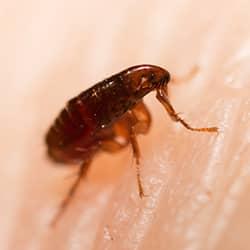
The most common species found in Massachusetts homes is the cat flea (Ctenocephalides felis), which affects both cats and dogs despite its name. Adult cat fleas are approximately one-eighth inch long, dark reddish-brown, and laterally flattened. This shape lets them move quickly through pet fur and makes them nearly impossible to catch.
One of the clearest signs of an infestation is flea dirt, the common name for flea excrement. It looks like black pepper or fine coffee grounds and shows up on pet fur, bedding, carpets, and upholstered furniture. If you’re unsure whether it’s flea dirt or ordinary debris, place some on a damp white paper towel. Flea dirt turns reddish-brown when wet because it’s made of digested blood. Ordinary dirt stays the same color.
On people, flea bites tend to cluster around the ankles and lower legs as small, red, intensely itchy bumps. On pets, look for excessive scratching, licking, restlessness, and patches of hair loss, especially around the base of the tail and behind the ears. Flea eggs are also present in infested environments but are nearly impossible to spot with the naked eye, since they’re smaller than a grain of salt and fall off the host into carpet fibers and floor cracks.
Why Fleas Are So Hard to Eliminate
Flea infestations are difficult to eliminate because of the flea life cycle. Fleas develop through four stages: egg, larva, pupa, and adult. Most people focus on the adults because those are the fleas they can see and feel, but adults typically represent only a small fraction of the total flea population in an infested home. The majority are eggs, larvae, and pupae embedded in carpets, floorboards, and upholstery where standard cleaning and over-the-counter products don’t reach them.
The pupa stage is the hardest to address. Inside a silken cocoon, flea pupae are highly resistant to insecticides and can remain dormant for weeks or even months. They don’t emerge until triggered by vibration, warmth, or the carbon dioxide that signals a nearby host. This is why homeowners sometimes think an infestation is resolved, only to see fleas return two or three weeks later. Those “new” fleas were already present as pupae and simply hadn’t hatched yet.
A single female flea can lay dozens of eggs per day, so an infestation that seems minor on Monday can look completely different by the end of the week. Addressing fleas only at the adult stage, without interrupting the cycle at every point, is the primary reason DIY efforts fall short.
When Are Fleas Most Active in Western Massachusetts?
Flea season in Massachusetts runs approximately from April through December, with peak activity from June through September when temperatures and humidity are highest. In Hampden County and surrounding areas, late summer, particularly August and September, tends to be when infestations become most severe and when calls for flea control in Western Massachusetts spike.
What many homeowners don’t realize is that fleas don’t disappear once the weather cools. Indoor flea infestations can persist year-round in climate-controlled Massachusetts homes because heated interiors sustain flea development through the winter months. If fleas established a presence in your home during the summer, they can continue breeding in carpets and upholstery long after the first frost.
The Health Risks Fleas Bring into Your Home
Flea bites are irritating enough on their own, but the health risks extend further than most people expect. According to the Centers for Disease Control and Prevention, fleas can spread tapeworms to pets and people when an infected flea is accidentally swallowed during grooming. Fleas can also trigger flea allergy dermatitis in sensitive pets. This is an allergic reaction to proteins in flea saliva that causes intense itching, skin inflammation, and significant hair loss from as few as one or two bites. Severe infestations can cause anemia in kittens, puppies, and small or elderly pets due to blood loss from repeated feeding. Other diseases fleas are known to carry include:
- Murine typhus
- Tularemia
- Bartonellosis
- The plague (rare but documented in the United States)
These risks make early identification and treatment important, not just for comfort, but for the health of everyone in the household.
How Fleas Find Their Way Inside
Pets are the most common way fleas enter a home, but they’re not the only one. Wildlife common to Western Massachusetts yards, including raccoons, squirrels, and opossums, can deposit flea eggs in soil, under decks, and in crawl spaces. Fleas can also hitch a ride on clothing and shoes after time spent in tall grass, wooded areas, or parks where wildlife activity is common, which is how non-pet owners end up with flea problems.
Another scenario that catches homeowners off guard involves moving into a previously occupied home. Flea pupae can remain dormant in carpet fibers for weeks or months. When new residents move in, the vibration and body heat from daily activity signal that a host is present. Those dormant pupae hatch, sometimes triggering what appears to be a sudden infestation with no obvious source.
How to Get Rid of Fleas & Keep Them Out
Effective flea control requires treating pets and the home at the same time. Treating only the pet leaves eggs, larvae, and pupae distributed throughout the environment, and those will continue developing and reinfesting your pet within days. Your veterinarian can recommend appropriate flea prevention products for your animals, and that step needs to happen in parallel with home treatment, not after.
Before a professional treatment, a few preparation steps can meaningfully improve results:
- Wash all pet bedding and household linens in hot water
- Vacuum all carpets, rugs, and upholstered furniture thoroughly
- Immediately dispose of vacuum bag contents outside so hatched fleas don’t re-enter the home
Vacuuming also helps stimulate dormant pupae to emerge, making them more vulnerable to treatment. Professional flea treatment addresses the infestation at all life stages, typically including insect growth regulators (IGRs) that prevent larvae from maturing into breeding adults. A follow-up visit within two to three weeks is standard. Pupae that survived the initial treatment inside their cocoons will begin hatching during that window and need to be addressed before the cycle restarts.
Why Choose American Pest Solutions for Flea Control in Western Massachusetts
American Pest Solutions has been serving Western Massachusetts and Connecticut since 1913, and that history translates into genuine familiarity with how pests like fleas behave in New England’s climate and landscape. Our team is led by Bob Russell, President and Board Certified Entomologist, who oversees treatment strategies and ensures our approach is grounded in current entomological science. Bob is a member of the Entomological Society of America, and that level of knowledge shapes how we approach every flea case, not just the straightforward ones.
We hold an A+ rating from the Better Business Bureau, an accreditation that dates back to 1946, and we’re QualityPro certified by the National Pest Management Association with licensed technicians in both Massachusetts and Connecticut. Our flea treatments use eco-friendly products derived from essential plant oils and follow integrated pest management protocols that prioritize safety for children, pets, and the surrounding environment. Same-day responses are available for urgent situations so you don’t have to wait through a weekend while fleas continue spreading.
If you’re dealing with fleas in your home or want to get ahead of the late-summer peak, reach out to our team at American Pest Solutions by calling (413) 966-1095. We serve homeowners and businesses in Springfield, Agawam, Northampton, and communities throughout Western Massachusetts and Hartford County, Connecticut.