From the Good Guys at American Pest Solutions
When homeowners in Western Massachusetts and Connecticut notice insects around their home or see signs of damage in wood, two pests often come to mind: carpenter ants and termites. At first glance, these insects can look surprisingly similar – especially during swarm season when both may have wings.
But while they share some similarities, they behave very differently and can impact your home in different ways. Understanding the similarities and differences between carpenter ants and termites can help homeowners in places like Agawam and across New England know what to watch for and when to call the professionals.
Let’s break it down the Good Guys way – simple, clear, and rooted in what homeowners in Western Massachusetts and Connecticut actually need to know.
Similarities Between Carpenter Ants and Termites
Although they are different insects, carpenter ants and termites share a few key characteristics that often cause confusion.
ㅤ
1. Both Target Wood Structures
Both pests are considered wood-destroying insects, meaning they can damage the wooden structures of homes and buildings over time.
In New England homes – where wood framing is extremely common – this can create real concerns if infestations go unnoticed.
ㅤ
2. Both Can Swarm
During certain times of the year, both termites and carpenter ants produce winged reproductive insects called swarmers. These swarmers leave the colony to start new nests, and homeowners often see them near windows or lights. Spring is typically when these sightings happen most often in Western New England.
ㅤ
3. Both Are Attracted to Moisture
Moisture is one of the biggest factors that attracts both carpenter ants and termites.
Areas such as:
- Damp basements
- Leaky pipes
- Window frames
- Decks or porch posts
- Water-damaged wood
can create ideal conditions for both pests to move in.
ㅤ
The Biggest Differences Between Carpenter Ants and Termites
While they share similarities, the key differences lie in their behavior, appearance, and the damage they cause.
ㅤ
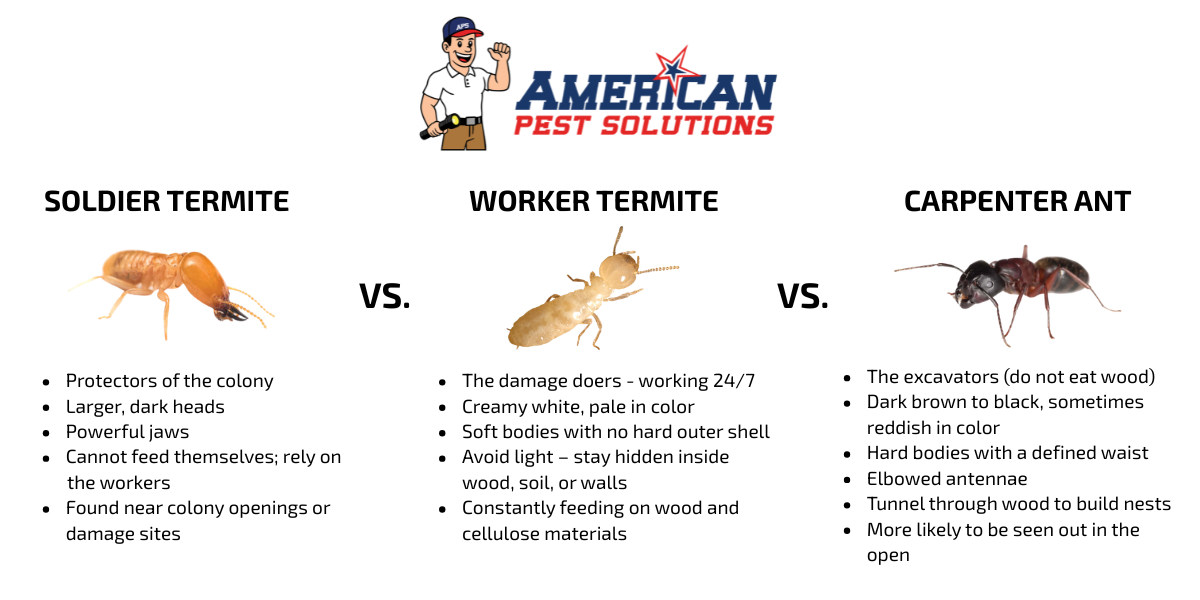
1. Carpenter Ants Don’t Eat Wood – Termites Do
One of the biggest differences is how they interact with wood.
Carpenter Ants
- Do not eat wood
- They excavate wood to create nests
- Usually prefer moist or decaying wood
Termites
- Consume wood as their primary food source
- Feed on cellulose inside wood
- Can damage structures much more aggressively over time
& because termites constantly eat wood, their damage often progresses faster and more extensively.
ㅤ
2. Damage Looks Different
The type of wood damage can also help identify which pest may be present.
ㅤCarpenter Ant Damage
- Smooth, clean tunnels inside wood
- Sawdust-like material called frass often nearby
- Damage tends to be localized
Termite Damage
- Rough, irregular tunnels
- Mud or soil inside the galleries
- Hollow-sounding wood or blistering paint
Another major termite indicator is mud tubes along foundations or basement walls.
ㅤ
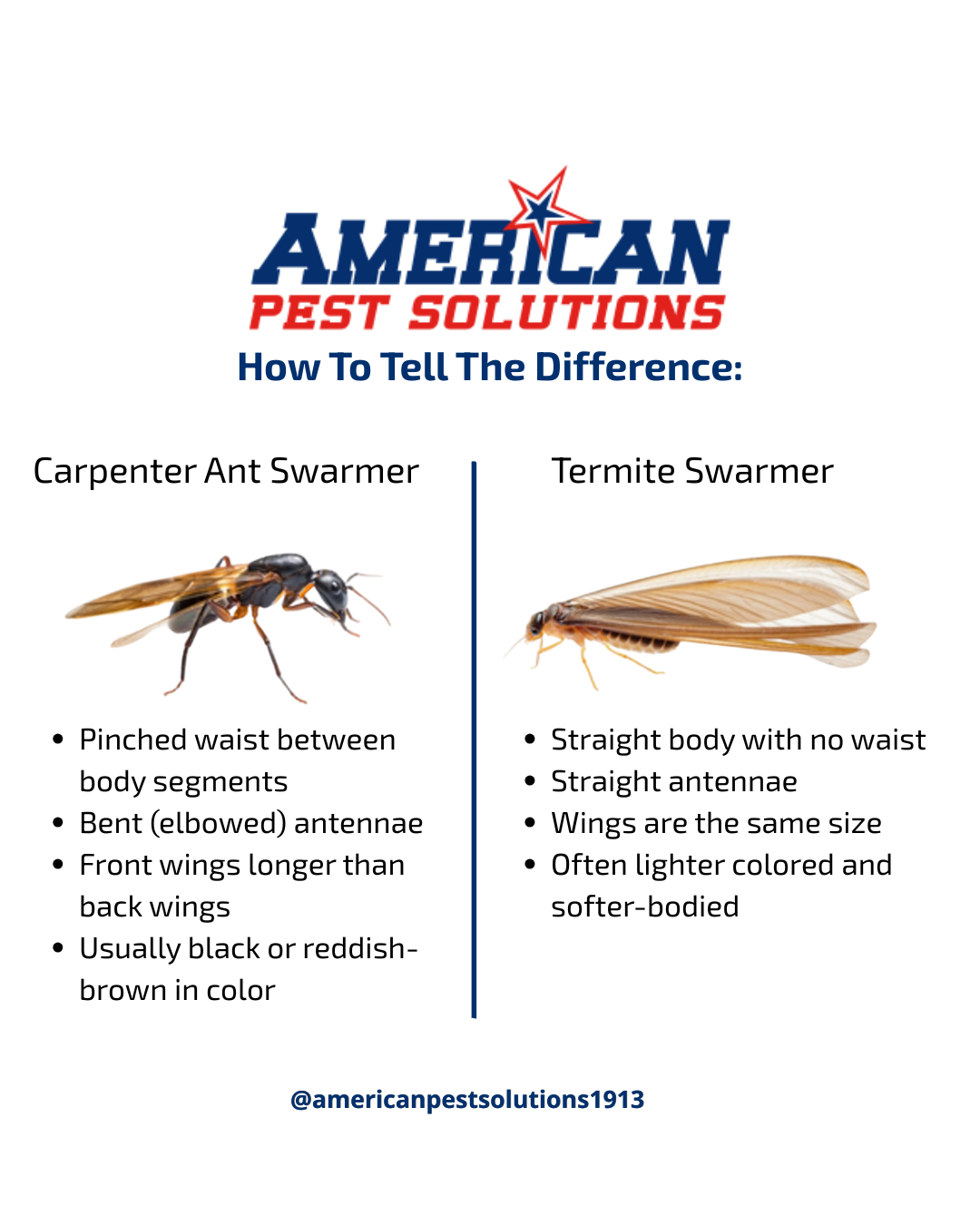
3. Their Bodies Look Different
If you happen to see the insect itself, there are several visual clues.
ㅤ
Carpenter Ants
- Pinched “waist” between body segments
- Bent (elbowed) antennae
- Usually black or reddish-brown in color
Termites
- Straight body with no waist
- Straight antennae
- Often lighter colored and softer-bodied
These small physical differences are often the fastest way pest professionals identify them.
ㅤ
Wings During Swarm Season
Winged ants and termite swarmers are commonly confused.
Carpenter Ant Swarmers
- Larger overall
- Front wings longer than back wings
- Wings unequal in size
Termite Swarmers
- Four wings all the same size
- Wings often extend far beyond the body
- Shed wings often found near windowsills
ㅤ
What Homeowners in Western New England Should Watch For
In homes throughout Massachusetts and Connecticut, early signs may include:
- Piles of sawdust-like debris (carpenter ants)
- Mud tubes on foundations (termites)
- Swarming insects in spring
- Hollow-sounding wood
- Ant trails or insect activity near windows
Because termites often remain hidden, infestations can go unnoticed for long periods.
ㅤ
Why Proper Identification Matters
Carpenter ants and termites require very different treatment approaches.
ㅤCarpenter ant control often focuses on:
- Finding the nest
- Eliminating moisture sources
- Treating galleries or entry points
Termite control, however, typically requires specialized treatments around the structure to protect the wood and stop active colonies.
Misidentifying the pest can lead to ineffective treatments and continued damage.
ㅤ
A Neighborly Tip From the Good Guys
If you’re seeing winged insects indoors in the spring or noticing signs of wood damage, it’s always a good idea to have it inspected by professionals who understand the pests common to New England.
At American Pest Solutions, we’ve been helping homeowners protect their homes and businesses since 1913. Our team knows what to look for when it comes to carpenter ants, termites, and other wood-destroying insects in our region.
ㅤ
How Carpenter Ants and Termites Impact Your Quality of Life
At American Pest Solutions, we don’t just think about pests – we think about people, homes, and quality of life. Because the truth is, carpenter ants and termites don’t just affect your house… they affect how you feel in your home.
ㅤ
Peace of Mind Matters
There’s nothing worse than wondering:
- “Is that sound in the wall something?”
- “Is my home being damaged right now?”
Carpenter ants can be unsettling when you start seeing them regularly – but termites bring a different level of concern, often causing damage quietly and over time.
Either way, uncertainty can disrupt your sense of comfort and security in your space.
ㅤ
Your Property Is More Than Wood & Beams
In New England, homes and businesses carry history – many have stood for generations.
When pests like termites or carpenter ants move in:
Structural integrity can be compromised
Repairs can become costly and stressful
Long-term damage can affect property value
Protecting your home or business means protecting your investment – and your future.
ㅤ
The Good Guys Difference: A Quality of Life Approach
We believe pest control should go beyond treatment.
It should:
- Restore comfort
- Remove uncertainty
- Prevent future stress
- Support a healthier home environment
That’s why we focus on long-term solutions, education, and prevention – not just quick fixes.
Give our team a call today!